Wednesday, November 30, 2011

Wednesday & Thursday, November 30 & December 1

Good day, history students!


For those of you without an iPad, please take out a piece of paper and wait for my instruction.

Today we will be revisiting Abyssinia and how it led to World War Two. Please click here to complete the in-class activity.

From the conflict in Abyssinia, we will see the steps Hitler took and what the British and French did (or didn't do) about it. We will complete an additional timeline tracking the events of the 1930s until 1940, noting the conflicts in the League of Nations and Hitler's movements. This will give us a good idea of the mounting tension in Europe in the 1930s.


Your homework: Looking back at the 1930s, choose one event (other than Hitler coming into power in Germany) that could have prevented World War Two. Explain how things would have been different. This is due Friday (P1M & P2M) or Monday (P2G & P4G).

Reflect on what we learned today:

Why was the League of Nations such an epic failure?

How did the League of Nations contribute to the start of World War Two?

Monday, November 28, 2011

Monday, November 28

Welcome back, history students!

Because of the field trip to ASU tomorrow, we will be taking a brief hiatus. We will look at some videos that showcase some of the issues and trends we were studying in the 1920s and 1930s.


Tuesday, November 22, 2011

Tuesday & Wednesday, November 22 & 23

Hello, history students!

Today we will be finishing up our time spent with the League of Nations. The guiding question we will be investigating today is "Why did the League of Nations fail in the the 1930s?"

We will search out the answer to this question through three case studies, namely Manchuria, Disarmament, and Abyssinia.

For your DO NOW, please take out your KWL chart from a couple weeks ago. Please fill out the L column with what you have learned about Germany between 1919-1939. Take five minutes to complete this chart.

Through Guided Notes and a pretty rocking Keynote presentation, we will explore how the economic depression gave rise to the crises in Manchuria and Abyssinia, as well as the failure that was the Disarmament Conference.

Please click here for access to the Guided Notes and Keynote Presentation.

Your homework:

Complete the Guided Notes packet, including the final page  AND

Write a descriptive essay about going back in time. Change either the Manchurian or Abyssinian crises. Describe what the time period was like and how you changed everything. How would this impact the future?

Decline of the League of Nations in the 1930s

Economic Depression impacting all countries


Hitler


Japan and Manchuria


Mussolini and Abyssinia


Mussolini


Haile Selassie, emperor of Abyssinia


Friday, November 18, 2011

Friday & Monday, November 18 & 21

Guten Tag, Studenten!

For you Do Now, please analyze this British cartoon from 1930 for audience, purpose, and message. Click here to submit.


Today we will be analyzing Nazi treatment of youths and women, as well as evaluating whether or not Germans gained from Nazi rule. You will need your textbooks as well as handouts.


After we look through our textbook, we will have a debate whether Nazi rule helped the Germans.

Your HW assignment: create a poster to represent some aspect of German we have studied between 1919-1939. Some options to choose from:

  • a poster for Hitler Youth
  • a poster against Hitler Youth
  • a poster protesting the occupation of the Ruhr

Wednesday, November 16, 2011

Wednesday & Thursday, November 16 & 17

Hello, history students!

Today is a new day.


For your Do Now, write your answer to this question:

  • What was the most crucial event or issue that led to Hitler taking over as Chancellor and eventually Fuhrer?
  • Please CLICK HERE TO SUBMIT ANSWER.

We will be looking into how Hitler maintain power and kept his opponents at bay, as well as analyze Nazi ideology.


Nuremberg rallies


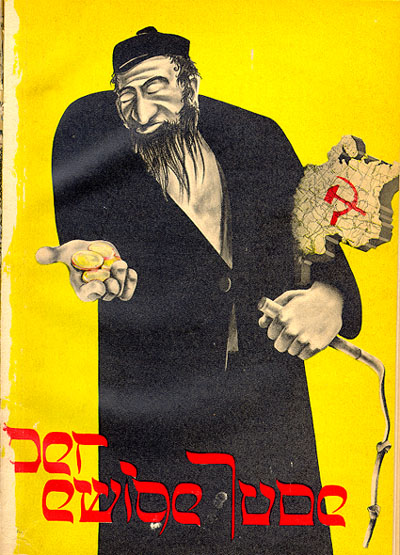
Nazi Propaganda


Today it is especially important that we reflect on the situation of Nazi rule in Germany:

What groups of people were treated unfairly? Why? Is this justifiable? Why did people go along with it? What groups were treated favorably? Why? Is this justifiable? Why did people go along with it?


Monday, November 14, 2011

Monday & Tuesday, November 14 & 15

Hello, history students!

Today we will be investigating how Hitler was able to gain and consolidate power in the 1930s. In order to do this, we need to continue to build on our knowledge of the Weimar Republic, its strengths and weaknesses, as well as our understanding of the Great Depression in the United States and how that impacted Germany.

For your Do Now, please Fling the Teacher! Click here to get started. Find Germany Lessons on the lefthand side (click it), then find 1920s Revision Game. Click it and have fun! You need to answer 15 questions correctly in order to fling the teacher. Once you have won, please get started on the next part of your Do Now.


Using your timeline we made last week, please write a paragraph explaining how the Weimar Republic helped pave the way for a ruler like Adolf Hitler. Please use some of our vocabulary, like communism, Reichstag, The Ruhr, hyperinflation, etc.

Click here for the worksheets we will be using in class and for homework.

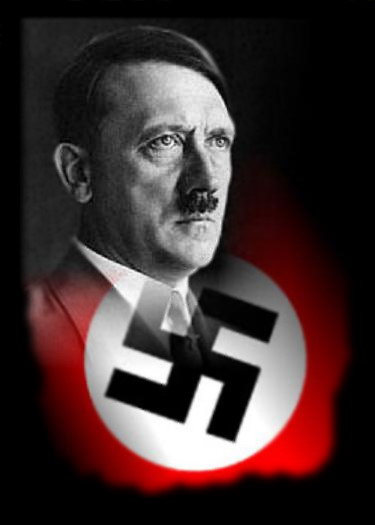
Hitler after appointment as Chancellor
Next we'll work together as a group to chart how the U.S. Stock Market Crash could cause miners in Silesia (eastern Germany) to lose their jobs and become homeless. Through this investigation we will be able to see how the Depression affected Germany and created a path for Hitler and the Nazis to rise to power.

The Nazi Party identified specific issues with the Weimar government. They also offered solutions to those problems. On pages 152-157, we will look at the problems with the Weimar government and how the Nazis proposed to solve them. Additionally we will investigate the idea of negative cohesion; some people believed the Nazis gained support due to this phenomenon. People collectively disliked certain things about German society -- and so did the Nazis.


SS Troopers parading in celebration of Hitler's appointment as Chancellor
Finally, we will create a new timeline, focusing on the early 1930s and Hitler's rise to becoming the Fuhrer. We need to look at specific events that occurred to bring him to power, including his appointment as Chancellor, the Reichstag Fire, the Enabling Act, the Night of the Long Knives, the death of President Hindenburg, and Hitler becoming the Fuhrer.


Reichstag Fire, 1933
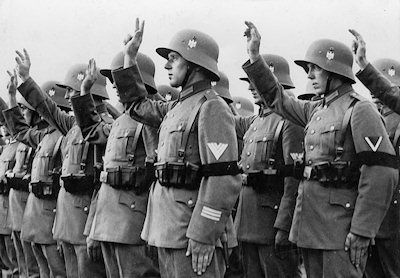
Members of the regular German army swear the oath of allegiance to the Fuhrer Adolf Hitler.

Your homework is to finish your timeline. Make it neat and presentable to add to the wall as we continue to build our timelines into the future. Also complete any part of the packet that you did not finish in class. This is due Wednesday (P1M & P2M)/Thursday (P2G & P4G).

For your ticket out, please answer this question: "In your opinion, what was the most crucial (important) issue or event that led to Hitler taking over as Chancellor and eventually Fuhrer in 1933/1934?"


Wednesday, November 9, 2011

Wednesday & Thursday, November 9 & 10


Good day, history students!

As you come in, please get BOTH textbooks!

Today we are going to find out what Hitler was up to during these exciting years of the Weimar Republic!

Monday & Tuesday we talked about the differences between Ebert's and Stresemann's administrations during the Weimar Republic. Each leader faced opposition, including Adolf Hitler and his National Socialist German Workers' Party.

As we will be studying how Hitler took the Chancellorship in 1933, we need to understand where Hitler came from in the 1920s. How did the Nazi Party gain power by the 1930s? Were they always powerful? Was Hitler always popular?


For your Do Now, please create another timeline. This timeline needs to span 1920-1930. Please label every year between 1920 and 1930. Leave plenty of space so you can fill in events as we talk about them today.


Next, with a partner, please discuss the question, "Who ran the Weimar Republic better, Freidrich Ebert or Gustav Stresemann?" Be sure to explain your answer. We will then discuss as a class.

As usual, we have more vocabulary to discuss today. Learning vocabulary like this helps us understand the important events and agreements that shaped history

Please click here to access the vocabulary from today and the rest of the unit.

We will be looking at a number of different pages in our textbooks today. In the big textbook, we will look at pages 148-151, 242-245, as well as pages 38 and 39 in the skinny textbook.


Through these pages we will investigate the events that carried Germany to follow Hitler in the 1930s. We will plot these events and information about them on our timelines. These timelines will help us understand how events transpired and in what order. This lets us see how things built on each other and peoples ideas and feelings changed over time.

P1M, P2G & P4G HOMEWORK: (1) Imagine you were in Munich as Hitler tried to take over the government. Write three different tweets describing what was happening. (2) Explain why the US stock market crash had such a large effect on the rest of the world.


P2M: (1) Imagine you were in Munich as Hitler tried to take over the government. Write three different tweets describing what was happening. (2) Explain why the US stock market crash had such a large effect on the rest of the world. (3) Knowing what you know now, would you have encouraged Dawes or Young to loan money to Germany? Why or why not?